
Palm Beach Residential & Commercial Real Estate
Buying a home, selling a property, or looking for commercial space in Palm Beach? Work directly with Blaise Punturo on homes, condominiums, waterfront residences, retail property and apartment buildings.
Prefer to speak directly? Call Blaise at (917) 797-1913.
Get Your Palm Beach Property Plan
Tell us whether you want to buy, sell or lease residential or commercial property, your preferred area and your timing. Blaise will follow up personally about your next step.
America’s Most Prestigious Address
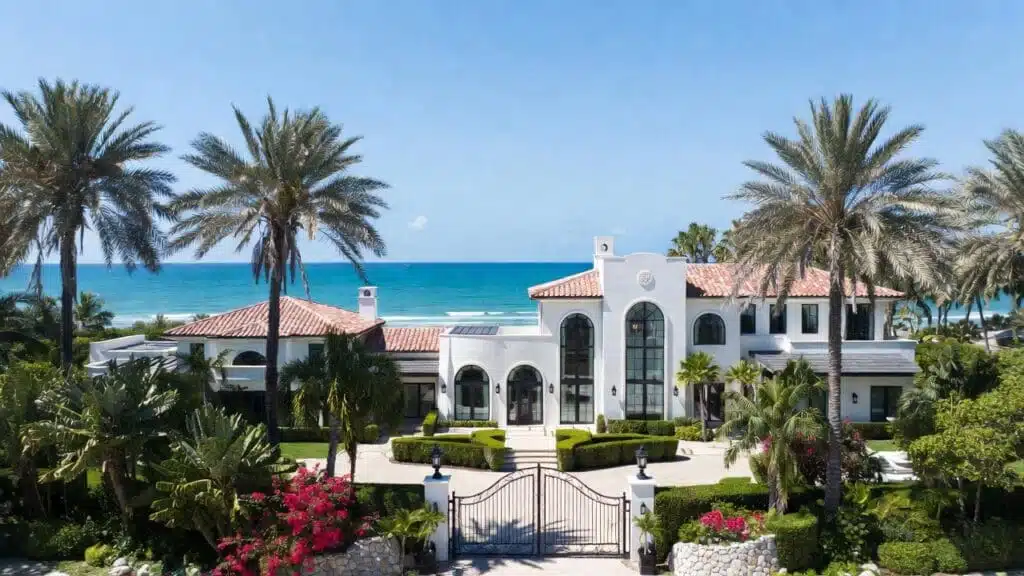
Palm Beach is not a neighborhood. It is not a suburb. It is an island — 18 miles long, no wider
than three-quarters of a mile at its broadest point — and it operates by rules that apply nowhere
else in American real estate. Separated from the mainland by the Lake Worth Lagoon and
connected only by a handful of bridges, Palm Beach has been the winter home of American
wealth for more than a century, since Henry Morrison Flagler extended his Florida East Coast
Railway to the island in the 1890s and built what is now the Flagler Museum. What Flagler
started, Addison Mizner, Maurice Fatio, and the Gilded Age families who commissioned their
work completed: the creation of an island that remains, into its second century, the most
prestigious residential address in the United States.
The real estate market reflects that history. The town has produced the highest five-year home
value appreciation of any major Florida market — 118.2 percent over the past five years — with
an average home value now reaching approximately $9.8 million. In the first half of 2025, nearly
70 percent of all single-family transactions on the island closed above $10 million. The median
single-family sale price reached $12.9 million by mid-2025. Palm Beach is home to 58 resident
billionaires, and the concentration of wealth on 18 miles of barrier island is unmatched
anywhere in North America.
For buyers considering Palm Beach, the calculation is different from any other luxury market.
This is not about whether the market will appreciate — the land-constrained supply, the fixed
geography, and the sustained international demand have made that question rhetorical for
decades. The real question is which zone of the island fits your lifestyle, which architectural
tradition suits your taste, which club affiliations matter to your social calendar, and which specific
property within Palm Beach’s four distinct neighborhoods represents the best match for your
objectives. This guide provides the framework. Executing on it requires a broker who
understands both the market and the institutional dynamics that govern how transactions
actually close on the island.
The Palm Beach Island Real Estate Market in 2026
Palm Beach’s market operates on its own timeline. While Palm Beach County broadly shows a median single-family sale price around
$675,000, the island itself transacts at more than twenty times that figure. The disparity reflects
what Palm Beach Island is: a private-club geography functioning inside a public-market
framework. Properties here are not compared to the county; they are compared to other Palm
Beach properties, and the universe of comparables is small, tightly held, and often off-market
entirely.
Recent data illustrates the market’s structure. The median listing price in early 2026 reached
approximately $2.95 million — but that figure reflects the full spectrum including condominiums.
The median sale price for single-family homes is closer to $4.2 million for smaller or less
prominent properties and climbs well past $12 million for prime Estate Section and oceanfront
inventory. Homes spend an average of 96 to 106 days on market — longer than most markets
because the buyer pool is smaller, more discerning, and often operating on a schedule that
prioritizes right property over quick closing.
What makes Palm Beach extraordinary as an investment category is the combination of
permanent supply constraint with sustained demand expansion. The island is fixed. The Town of
Palm Beach’s strict architectural review and zoning enforcement ensure that no meaningful new
inventory can be created. Demand, meanwhile, continues to expand as wealth migration from
Connecticut New York, California, and international
markets continues to identify Palm Beach as the premier destination for primary, secondary, and
tax-residence properties. The tax regime is a structural advantage that compounds every year it
persists.
Market Snapshot by Property Type

The Four Zones of Palm Beach
Palm Beach Island is divided informally into four geographic zones running north to south.
Understanding the character and pricing of each zone is essential to evaluating any specific
property. The four zones operate almost as separate micro-markets, each with its own
architectural traditions, social rhythms, and buyer profiles.
The Estate Section
The Estate Section stretches from Worth Avenue south to Sloan’s Curve, and it contains the
most historically significant and architecturally distinguished properties on the island. This is
what most people picture when they think of Palm Beach. The lots are large by island standards
— some exceeding two acres — and the homes on them are the Gilded Age and Mediterranean
Revival estates that Addison Mizner, Maurice Fatio, and Marion Sims Wyeth built for the
Vanderbilts, Stotesburys, Phippses, and Munns. Mar-a-Lago, the former estate of Marjorie
Merriweather Post and now a private members club, sits within the Estate Section on 17 acres
of oceanfront land. The Bath and Tennis Club, built by cereal magnate Edward F. Hutton,
anchors the beach side of this neighborhood.
The Town (In-Town)
The Town section extends from Wells Road south to Worth Avenue, encompassing the island’s
walkable commercial and social core. This is where Worth Avenue’s four blocks of luxury retail,
the Royal Poinciana Plaza, the Breakers hotel, the Town Docks, and the Henry Morrison Flagler
Museum cluster together. Royal Palm Way — often called Bankers Row — houses international
financial institutions, private banks, wealth management offices, and professional services firms
that serve the island’s residents.
Residential inventory in the Town section is dominated by condominiums and co-operative
apartments in buildings such as 150 Worth, 100 Worth, the Breakers West, and the historic
buildings lining South County Road and Peruvian Avenue. Single-family homes in this zone tend
to be smaller than Estate Section properties but command significant premiums for walkability.
Buyers who value proximity to Worth Avenue dining, Royal Poinciana Plaza shopping, and the
island’s cultural institutions — The Society of the Four Arts, the Flagler Museum, the Four Arts
Library — gravitate here.
The North End
The North End stretches from Wells Road north to the Palm Beach Inlet, and it offers what
residents describe as the island at a softer volume. Quieter residential streets, larger lot sizes in
parts of the neighborhood, and a landscape defined by Bermuda-style homes, Palm Beach
Regency architecture, and contemporary renovations sympathetic to the island’s traditions. The
Lake Trail — the signature walking and biking route along the Intracoastal side of the island —
runs the length of the North End and functions as a true daily amenity for residents.
The North End attracts buyers who want Palm Beach Island’s address, tax environment, and
beach access without the formality and proximity pressures of the Estate Section. Oceanfront
properties here transact in the $12 million to $40 million range, with non-oceanfront inventory
accessible from approximately $5 million. The Palm Beach Country Club and the Sailfish Club of
Florida anchor the North End’s private club infrastructure, and proximity to the Palm Beach Inlet
makes this zone particularly popular with serious boaters and yachting residents.
The South End
The South End begins at Sloan’s Curve and extends to the southern tip of the island at Ocean
Avenue, including South Palm Beach. This zone is defined by a more relaxed,
community-oriented atmosphere relative to the Estate Section’s formality, and it contains a
concentration of condominium buildings along South Ocean Boulevard. The South End attracts
buyers who want Palm Beach Island’s address, tax environment, and beach access without the
acquisition costs and maintenance obligations of Estate Section single-family properties.
Condominium buildings in the South End offer lock-and-leave lifestyles, oceanfront pools and
cabanas, and price points that start around $1.5 million and extend into the $8 million range for
premier units in buildings with strong reputations. For buyers new to Palm Beach — or buyers
transitioning from a larger mainland primary residence — the South End represents the most
accessible entry into the Palm Beach Island lifestyle while maintaining the address and tax
benefits that define the island.
Worth Avenue and the Lifestyle of the Island
Worth Avenue is Palm Beach’s legendary shopping district and one of the world’s most
recognized luxury retail addresses. Four blocks stretching from the ocean to the Intracoastal,
lined with Chanel, Hermes, Graff, Van Cleef & Arpels, Ralph Lauren, Tiffany, and dozens of
specialty boutiques, galleries, and restaurants. The avenue hosts the annual Palm Beach Wine
and Food Festival, the Pet Parade, and a calendar of events that anchor the island’s social
season from November through April. The Royal Poinciana Plaza — known as The Royal —
adds a renovated destination featuring Hermes, YSL, Marissa Collections, and curated
restaurants. The Shops at The Breakers complete the retail landscape with boutiques clustered
around the hotel’s palm-shaded courtyards.
Beyond retail, Palm Beach’s cultural infrastructure is extensive. The Henry Morrison Flagler
Museum, housed in Flagler’s Gilded Age mansion Whitehall, preserves the architectural and
cultural heritage that defined the island’s origins. The Society of the Four Arts offers year-round
programming in music, visual art, lectures, and film, along with one of the finest small libraries in
South Florida. The Norton Museum of Art sits just across the Intracoastal in West Palm Beach.
And the Breakers hotel, the Brazilian Court, the Colony, and the Tideline deliver restaurant and
hospitality experiences that make the island a destination even for residents of the mainland.

Private Clubs and Social Infrastructure
Palm Beach’s social structure is organized around its private clubs to a degree unmatched in
most American luxury markets. The Everglades Club, founded in 1919, occupies a
Mediterranean Revival campus on Worth Avenue and maintains one of the most selective
memberships in American private-club history. The Bath and Tennis Club, on the oceanfront in
the Estate Section, combines beach and tennis facilities with a social calendar that defines the
Estate Section’s winter season. The Sailfish Club of Florida anchors yachting culture on the
North End. The Palm Beach Country Club offers golf, tennis, and social programming on the
northern portion of the island. Mar-a-Lago operates as a private members club following its
reconfiguration from the Post family estate in the 1980s.
For prospective buyers, understanding the club landscape is essential because club
membership is not automatic with property purchase and is often the primary driver of social
integration into the island. Membership processes, sponsorship requirements, and initiation fees
vary by club and are subjects that Blaise Punturo Real Estate addresses directly with clients at
the appropriate stage of the relocation or acquisition process.
Why Palm Beach — The Tax and Lifestyle Advantages
The Florida tax regime is a primary driver of wealth migration to Palm Beach, and the
mathematics are substantial. Florida has no state income tax, no state estate or inheritance tax,
and no state capital gains tax. For high-net-worth individuals with primary residence in
Connecticut, New York, New Jersey, California, or other high-tax states, establishing Florida
residency — which requires, among other things, spending more than 183 days per year in the
state and establishing Palm Beach as the true center of family and financial life — can produce
annual tax savings running into seven and eight figures for families with significant income or
capital gains.
Homestead protection under Florida law caps annual property tax assessment increases at 3
percent and provides meaningful creditor protection for the primary residence. The Save Our
Homes amendment preserves this protection over time, which has the effect of making
long-term ownership of a Florida primary residence significantly more advantageous than
frequent relocation. For clients considering a relocation from Connecticut or another high-tax state to Florida, the Palm Beach Island property often
functions as both the centerpiece of a lifestyle transition and the fulcrum of a tax strategy.
Beyond tax advantages, the island offers the lifestyle that has defined American wealth for more
than a century. Ocean access from multiple zones. World-class dining within walking distance in
the Town section. An international airport (PBI) fifteen minutes away. Palm Beach International
Airport’s private aviation facility handles more Fortune 500 private jets than almost any other
general-aviation field in the Southeast. The season runs from approximately late October
through May, with the peak social calendar concentrated December through April. For families
who want a primary or substantial seasonal residence that functions as both a personal
headquarters and a social platform, Palm Beach Island remains unmatched.
The Buying Process on Palm Beach
Transactions on Palm Beach Island require a process that differs materially from standard
Florida real estate. Many of the most desirable properties — particularly in the Estate Section
and on Billionaire’s Row — transact entirely off-market, through networks of brokers who
maintain relationships with the island’s long-term residents and their family offices. Access to
those networks is not acquired through a standard MLS search; it is built through years of
professional relationships, discretion, and demonstrated competence in handling complex
transactions
Co-operative apartment purchases in the Town section require board approval processes that
function like private-club admission reviews — financial disclosure, personal references, and
sometimes interviews with existing board members. Condominium purchases in the South End
are more straightforward but require careful review of building financials, reserve studies,
structural integrity reports (particularly post-Champlain Towers), and any pending special
assessments. Single-family purchases in the Estate Section require attention to Town of Palm
Beach architectural review ordinances, landmarks designations, and the specific restrictive
covenants that often run with particular properties.
Blaise Punturo brings over 30 years of real estate and financial services experience, dual Connecticut and Florida licensure, and the analytical
approach to market evaluation that high-value transactions require. For buyers approaching
Palm Beach Island for the first time, that expertise compresses what can otherwise be a
prolonged and confusing discovery process into a structured evaluation of the specific
properties, zones, and clubs that match your objectives
Frequently Asked Questions About Palm Beach Island Real Estate
Explore Nearby Communities
West Palm Beach, directly across the Intracoastal, offers the emerging urban waterfront of El
Cid, SoSo, and Flagler Drive with significantly lower entry points and growing cultural
infrastructure. Jupiter and Jupiter Island to the north deliver equestrian and yachting-focused
luxury at distinct price points. Boca Raton combines golf-community living with cultural
institutions and cosmopolitan amenities. Delray Beach offers walkable Atlantic Avenue dining
and an artistic identity. For buyers managing both Northeast and Florida residences, Palm
Beach pairs naturally with Greenwich
the traditional Northeast anchor for Palm Beach winter residents.
Explore Palm Beach Island with Blaise Punturo Real Estate
Palm Beach Island’s market rewards buyers who understand the distinctions among the four
zones, the architectural traditions that define specific properties, the club infrastructure that
shapes social integration, and the transaction dynamics that govern how the island’s most
desirable properties actually change hands. Blaise Punturo brings over 30 years of real estate
and financial services experience, dual Connecticut and Florida licensure, and the analytical
approach that complex high-value transactions require. For clients pursuing a Palm Beach
Island acquisition — whether a Worth Avenue condominium, a North End residence, an Estate
Section legacy property, or a South End lock-and-leave — Blaise provides the expertise, the
discretion, and the Florida-Connecticut dual-market perspective that this uniquely demanding
market requires.
Quick Facts
Explore More
- Fairfield County Connecticut Real Estate Guide
- Greenwich CT Real Estate Guide
- Luxury Homes Connecticut & Florida Real Estate Guide
- Palm Beach County Florida Real Estate Guide
- Waterfront Homes Connecticut & Florida Real Estate Guide
- Investment Real Estate Connecticut & Florida Guide
- Commercial Real Estate Connecticut & Florida Guide
- Relocation Guide Connecticut & Florida Real Estate